




Whimzees

Maintaining Health in Your Senior Pet

Senior Pet

While it might feel like those playful kitten and puppy years will last forever, most cats and dogs are considered seniors by the time they are six and seven years old. The senior years are when health problems can start. By being aware of what they are and how to maintain health in your senior pet, you can keep your senior pet feeling, looking, and acting young and spry for years to come.

Preventative Healthcare for Senior Pets

When it comes to pet health care, being proactive is one of the best things you can do.

Proactive health care includes:

  • Regular vet visits – Don’t miss those annual wellness checks; your vet is trained to catch early signs of health problems and to make recommendations regarding the best diet and dietary supplements for your pet’s breed, condition, and age.
  • Monitoring your pet’s hygiene – As your pet ages, you will not only want to help with regular hygiene, which includes bathing and brushing, teeth brushing, ear cleanings, gum inspections, eye inspection, parasite checks, and the like, but you will also want to inspect your pet for signs of trouble, for lumps, for dry skin, for missing teeth, etc.

pet grooming

  • Daily exercise – A plethora of health problems set in when animals become sedentary. As a pet naturally ages and as his health naturally declines, exercise can become more of a challenge. By never ceasing a fitness regimen, it can be easier to maintain physical health in an aging or senior pet.
  • Adopt a healthy diet – Internal problems with your pet’s organs and systems can start as a result of poor diet. If your pet is consuming foods with a lot of foreign ingredients, make the switch to a natural pet food with ingredients scientifically proven to support bone and joint health, for building lean muscles, for being rich in healthy fats, and for promoting liver, digestive, and other systematic health.

When you do see your vet, inquire about supplementing your pet’s diet with supplements or with fatty acids, glucosamine and chondroitin, etc., which can help support your pet’s mobility. You can also ask if your vet recommends changing your pet’s food to something that is specially formulated for aging pets.

Things to Monitor in Aging Pets

As your pet ages, she will naturally slow down a little; however, there are many signs of issues beyond advanced age. As the years tick by, monitor your pet for the following changes or conditions.

  • Dramatic weight changes – Senior pets can gain or lose too much weight; dramatic changes in either direction are indicative of a problem. Such problems could be dietary, exercise related, or symptomatic of an illness.
  • Mental health issues – Like people, pets can get senile as they age. This is particularly true of pets that are under-stimulated.  Signs include wandering, repetitive behavior, signs of anxiety, confusion, disorientation, irritability, aggression, bathroom accidents, and antisocial tendencies to name a few.
  • Changes in habits and behaviors – Kidney, urinary tract, and heart disease are evident by changes in your pet’s behaviors. Such changes include increased or decreased urination, coughing, trouble breathing, poor or increased appetite, poor or increased thirst, poor hair / coat, vomiting, and weakness. 

Should any of these signs present, you should document them. Write down what the activity is (and record it on your smartphone if possible), when it occurs, how long the behavior lasts, and how frequently it occurs. Then, schedule an appointment with your veterinarian. The sooner you have a plan of action, the better your pet’s outcomes will be.

Caring for Your Senior Pet

In addition to making provisions for monitoring your pet’s health as he ages, you also want to make sure that you are being emotionally supportive of your pet. Just because your pet isn’t as active as he used to be, make sure you still spend time with him, play with him, throw a ball with him, and show him love and affection. This will help your pet feel motivated and happy, and it will help you maintain your pet’s health and wellbeing as he ages.older dog

Cats and dogs deserve to live long, healthy lives. By learning how to proactively feed and care for senior pets, you can ensure you pet is around and is healthy for many years to come. That is why Wellness Pet Food has created several different all-natural cat and dog food formulas for pets of varying ages.


From an Idea to Your Pantry: How Wellness Creates New Products

How Wellness Natural Pet Food Creates New Products

Wellness is known for having over 100 years of experience creating the best food for the pets that depend on us. While we’ve perfected our nutritional approach to natural foods with superior ingredients and unwavering attention to quality, we also have a full-time Innovation team dedicated to bringing Wellness fans the latest and greatest food and snack options for their pets.

Get ready for an inside look at how our Innovation Team takes a new product from ideation all the way to the final, delicious product you see on shelf!

How We Create New Products:

Step 1: Inspiration

Inspiration comes from many places. We’re constantly thinking of new recipes, forms, flavors and varieties to offer our furry friends.

What inspires us?

You! We have a dedicated Consumer Affairs team who not only answers questions about our existing products, but receives your requests and suggestions for new products you’d love to see from us. 

Will you have a CORE RawRev puppy food? I really want to feed this but I can’t yet because my dog is only 10 weeks old. -Ashlie B.

Our own pets. Many of us are proud pawrents ourselves and we’re always looking to keep our pets happy, healthy and satisfied!

Our own diets. We practice healthy living ourselves and make sure we’re keeping up with any of the latest human food trends that may be able to be applied as a beneficial diet for dogs or cats.

Step 2: Ideation

From inspiration, we then move to ideation. What does the food ultimately look like? What food form should we deliver it in? What ingredients will best fit the recipe? What flavors should we offer?

Wellness CORE pet food designs

To help answer these questions and shape our new product concept, we utilize various sources of information. This includes consulting with our internal teams and external customers, conducting consumer research and analyzing industry data, to name a few.

Step 3: Formulating the Recipe:

Wellness recipe production

Once we have defined our vision of the new product, we then move on to recipe formulation. We work closely with our team of food scientists, nutritionists and veterinarians to ensure our desired recipe is not only delicious, but also nutritionally appropriate and beneficial for dogs or cats. Once we have worked our magic, the recipes are carefully evaluated for nutritional performance and digestibility (which is a fancy way of saying we want to make sure pets are absorbing all the great nutrients we put in the product).

Step 4: Bringing it to Life with Packaging

After the nutritional details are confirmed to be as awesome as we intended, our team works closely with designers to bring the product to life through its packaging. You might be surprised about how much time and thought goes into each element of the packaging, including the photography, words and iconography on the bag.

Wellness CORE Bowl Booster Mixers and Toppers

Packaging design is something we take very seriously because when you pick up the bag, we want you to be thoroughly informed about exactly what you’re getting when you purchase the final product, and how the product will nourish and benefit your dog or cat.

Step 5: Recipe Production & Quality Assurance

Once all the details are finalized, the artwork is sent off to be generated into final packaging and production of the new recipe can begin! That is where our quality assurance team steps in— to ensure everything from raw ingredient sourcing to final production is held to our high quality standards. You can read more about our Quality Assurance process here.

Wellness pet food formulation

We apply this process to all of our innovations, including the newest wave of products hitting store shelves now. This includes our line of tasty, TENDER or PURE Wellness CORE toppers, Bowl Boosters, and our new CORE RawRev Puppy and Healthy Weight formulas. And for our feline friends, NEW CORE RawRev for cats and new CORE 95% protein canned recipes.  

Have you tried any new Wellness recipes lately? Let us know on Facebook, Instagram or Twitter by using the hashtags #wellnesspetfood and #wellnessCORE. We’d love to hear from you, and might even feature you on our website or social pages!

How to Plant a Pet Friendly Garden This Spring

TerraCycle is an innovative recycling company that has become a global leader in recycling hard-to-recycle waste. Wellness Natural Pet Food is the first U.S.-based pet food brand to make its packaging nationally recyclable through a partnership with TerraCycle. So far, the partnership has resulted in 80,000 pet food bags diverted from landfills.

Raising a pet is a lot like growing a garden. They both require close attention, proper watering and feeding, and the care that comes with understanding their needs. But while they have their similarities, pets and gardens don’t always get along.

Pets around the world have been known to stomp on and relieve themselves in gardens. Sometimes, they’ll eat the plants in it, which not only destroys the space, but can make them sick. Before you resolve to keep the two separate, know that with a bit of help, pets and plants can live harmoniously in the same yard.

Here’s a short list of tips for the two-fold goal of raising a pet-friendly garden, along with a garden-friendly pet:

It all starts with training

 A well-trained pet is a good starting point for a peaceful plant garden. Especially if the garden is established as a no-go area, an obedient pet is much less likely to be destructive, and will listen to commands.

Build a border

Creating garden borders can help to keep your pet out. Simple solutions include a small wooden fence, pieces of driftwood, or chicken wire, depending on the pet and plants that need protecting. Another way is a natural border of large, sturdy plants at the garden’s exterior. Lining this border with a paw-friendly pathway (small cedar chips are great for this) gives your pet somewhere to walk near the plants without ruining them. With designated paths and a well-distinguished border, your pet may take it into their own paws to protect the garden!

Give your pet alternative solutions

This step can be hard for people with limited space in their yard. However, giving pets, especially dogs, established areas to relieve themselves, dig, run, enjoy shade and play can help to avoid your pet using your garden to do these things. A dog sandbox can give your dog exactly what it needs to fill its digging needs, while a marking post, like sculptural piece of driftwood, can serve as a place for dogs to mark their territory.

Plant pet-friendly plants

In case your faunal family member does get into the garden, make sure it is full of flora that is beneficial, not harmful. Your cat may like a catnip plant, and lavender is calming for people and dogs. Colorful petunias, marigolds and gerber daisies can co-exist with cats and canines, and parsley and carrots are great for dogs (and humans!) to eat. With summer coming, citronella wards off mosquitos, which can cause heartworms in pets. 

Avoid thorny and spiny plants, and be cautious about growing plants that are toxic to animals, such as tulips, daffodils and lilies. The ASPCA’s full list of plants to avoid can be found here.

Be a responsible pet parent

They say that pets look like their owners, and act like them, too. Responsible pet owners breed responsible pets. In order to reach this goal, it is important to take into account the needs of your pet and the environment in which it lives. Practice good habits with your pet every day, whether it’s feeding them on a consistent schedule, properly recycling their Wellness food packaging or taking the time to play with them. Feeding off your energy and respect for shared spaces will help your pet be calm, happy and able to live in concord with the plants you keep. 

What to Feed Your Pet if They Have Food Allergies

Animals, like people, can develop allergies to substances in their environment. When inhaled, consumed, or put in contact with an animal’s skin, such substances cause an allergic reaction. Food allergies can be difficult to detect; however, when detected, you should make appropriate adjustments to your pet’s diet. 

wellness dog food

Signs of Food Allergies in Pets

Because signs of allergies mimic signs of other ailments or could show up in conjunction with other ailments, they can be difficult to detect. Typically, dogs with food allergies will also exhibit these signs: 

  • Multiple ear infections
  • Itchy skin
  • Diarrhea and / or vomiting 

Additional general signs of allergies include:

  • Increased scratching
  • Runny eyes
  • Sneezing
  • Snoring due to throat inflammation
  • Swollen paws
  • Excessive licking 

Pets can develop food allergies at any age, so it is important to be aware of what an allergic reaction in pets might look like and that you aim to diagnose the cause of the allergy as soon as possible when signs of an allergy present.

freeze dried dog food

Diagnosing Food Allergies in Pets 

If you suspect your pet has a food allergy, you should take him to the vet. Your vet can conduct blood tests and can make recommendations for conducting an elimination diet to determine what food or foods is causing the problem. Common pet food allergens are added colors, flavors, and fillers as well as types of ingredients and multiple proteins. 

The Right Food for Pets with Allergies 

Typically, a limited-ingredient pet food with a single main ingredient will be the solution for resolving food-related pet allergies. Limited ingredient pet foods enable you to exercise complete control over what your pet consumes. Selecting pet foods made exclusively with all-natural ingredients, such as those created by Wellness Pet Food, gives you further peace of mind in knowing there are not added flavonoids, chemicals, or fillers, which can cause allergic reactions and other major health problems.

If your pet has allergies, CORE products feature recipes that accommodate their special dietary needs.

For dogs:

  • CORE Simply Shreds: CORE simply shreds mixer or toppers are 100% all-nature five-ingredient-or-less toppings or snacks that come in a variety of flavorful combinations like chicken, beef, & carrots; chicken, wild salmon, & pumpkin; or chicken, chicken liver, & broccoli to name a few. The recipes are 100% grain free and are potato free for sensitive dogs.
  • CORE 95%: These single-source protein meals are grain free and are an ideal choice for dogs with multi-protein or grain allergies. The combinations include: chicken with broccoli, turkey with spinach, and beef with carrots. These wet meals can be served as-is or paired with CORE Simply Shreds toppers for additional nutrients and flavor.
  • CORE 100% Freeze Dried Treats: CORE freeze dried treats are made exclusively from real meat. No wheat, corn, soy, artificial flavors, or preservatives were used in these treats, perfect for dogs with allergies. The flavors include: turkey, beef, salmon, or boar. 

food allergies

For cats:

  • CORE Indoor Ocean: CORE Indoor Salmon & Herring is a grain-free dry food formula for cats that cannot tolerate protein. There are multiple CORE dry food combinations that support your cat’s digestive balance, lean muscle mass, hip and joint support, and skin and coat as well as her special allergy needs. Other combinations feature turkey and chicken or turkey and duck. There are several formulas for cats of all ages. 
  • CORE 95%: Like Wet CORE 95% for dogs, CORE 95% for cats features a 95% protein formula with limited ingredients and zero grains. The recipes come in single or double-source protein options and include: beef & chicken; chicken; chicken & salmon; & turkey.

cat food

By adopting a limited-ingredient diet for your pet, you can help manage their allergy symptoms and ensure a better overall quality of life as such diets often have additional health benefits that boost your pet’s energy levels and immune health while promoting longevity.

Since its inception, Wellness Pet Food’s mission has been to make pet foods that support lifelong health and wellness. Our limited ingredient CORE formulas are specially formulated with sensitive pets and pets with allergies in mind because they deserve long, happy, healthy lives, too. 

Becoming a First Time Pet Parent

I’ve grown up with dogs my whole life, and I knew that one of the first things I was going to do once I was on my own was get a puppy. However, the thought of having this overwhelming responsibility was definitely daunting, and I wasn’t sure if it was the right time to bring a puppy into my life. A few days later, Koda, a blue eyed Weimaraner came into my life, and our adventure began. 

The first thing I learned as a new pet parent was that there’s never going to be a “right” time to get your first dog, and that those first few months are something you’ll never regret or forget. There was a steep learning curve and I found myself scouring blogs just like the Live Well blog by Wellness Pet Food, trying to learn as much as I could about food, vaccines, exercise, and training so I could properly take care of my new best friend. 

I’ll be the first to admit, my situation is pretty unique. As a professional athlete, I’m home from practice by lunch time most days which allows Koda and I to explore every afternoon, and living in the Pacific Northwest caters to our need for adventure. In his first year Koda’s been to five national parks, visited six states, ran in the Pacific Ocean, camped atop several mountains, and has probably chewed over 1,000 sticks. My schedule also allowed me to spend a lot of time bonding with Koda right from the start. He’s well trained and we’re totally inseparable – which means he has a bit of separation anxiety whenever I leave him for work road trips. However, the rest of the time our close bond makes it great because I don’t have to worry about him during our adventures.

The second thing I learned is that some words are sacred – ball, stick, smell, snack, friends, etc. Dogs are smart and Koda knows when I say “friends” that he gets to go to the dog park to play. I’m sure most dog owners have their own list of words and they understand the struggle of not accidentally using those scared words.

I also learned that no matter how tiring and frustrating it can be having a puppy, your dog will love you unconditionally and that alone makes it all worth it. Koda has done more than his fair share of testing my patience in our first year together. Although he knows better, he still can’t resist getting into the garbage when he smells bacon, he’s eaten an entire roast right off the counter, and he even chewed up our blinds so that he can look outside. But even through all of that, he’s my best friend and I can’t picture my life without him by my side. 

If you’re trying to decide whether or not you should get a dog, my advice is to just do it. You won’t regret it for a second. Your new companion will be by your side through everything and love you unconditionally.

How to Get Involved with Your Local Animal Shelter

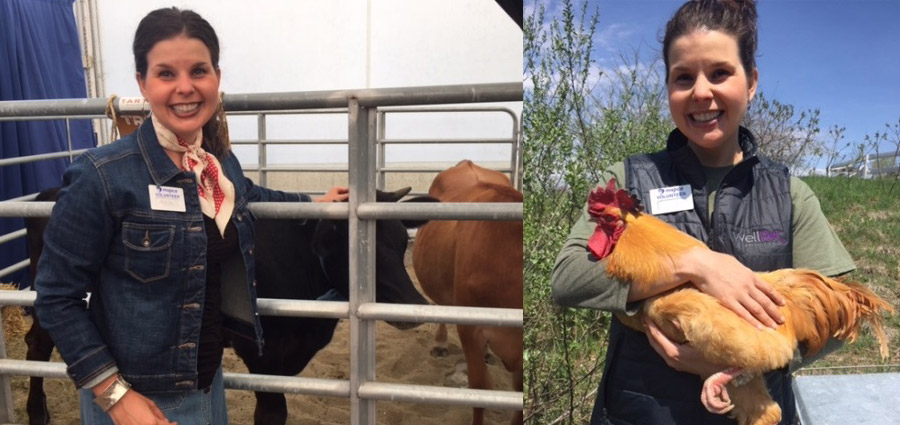
Alicia is responsible for front office operations at WellPet, ensuring excellent customer service to visitors and employees, and is a corporate culture advocate. Here, she talks about her passion for volunteering at pet rescues and shares some helpful tips for those who are interested in helping animals but might not know where to start.

Why do I volunteer?

 Growing up, my family frequented the MSPCA at Nevins Farm in Methuen, MA to make donations of treats and newspapers – with the added benefit of being able to cuddle the animals available for adoption.  For a place that provided me with such joy, it only made sense for me to give back to their shelter.  I now volunteer at 3 local shelters (MSPCA at Nevins Farm, Salem Animal Rescue League and Lowell Humane Society) that provide a welcoming environment to small and large animals alike while they are waiting to find their forever home.    

alicia with puppy

What I do:

I am part of the outreach teams at these three shelters and assist at on-site and community events.  Goals of the outreach teams are to educate the public about the shelters, raise much-needed funds, and to find homes for the animals.   It always brings me happiness to watch someone interact with an animal for the first time and to see them leave the shelter with a new family member. There tends to be a stigma that an animal at a shelter has something “wrong” with it, but there are many reasons why an animal is placed at a shelter including the owner’s financial issues, a change in family dynamics, or a move that doesn’t allow pets.

alicia with goat

How do you get involved?

Most shelters are actively looking for volunteers! Help is always needed for a wide-range of tasks. From doing laundry to caring for barn animals – the shelter teams are willing to invest the time in properly training volunteers at any skill level.  Volunteers usually go through an application background check, attend orientation and then begin training from a mentor at the facility. There’s generally an age requirement for certain tasks, but most shelters will welcome any assistance you can provide. One misconception is that you need abundant free time to volunteer – but shelters are generally willing to work with your schedule and availability to find a fit that works for you. Many shelters offer children’s programming as an introduction of how to care for the animals and fundraising opportunities.

WellPet works closely with many animal rescue and shelters throughout the United States. We encourage you to reach out to your local facilities that are looking for volunteers. 

What is AAFCO?

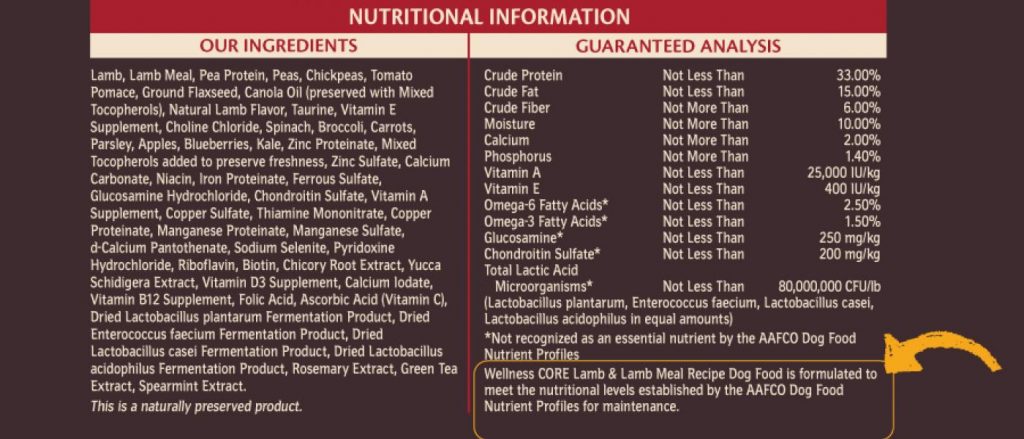
At Wellness, we hold ourselves to the strictest quality standards when it comes to sourcing our ingredients, manufacturing our foods and labeling or our products. As we strive to exceed the expectations of the industry and craft the best natural food for our pets, we look to AAFCO (Association of American Feed Control Officials) to guide our decision-making when it comes to formulating and labeling our products.

What is AAFCO?

AAFCO is a non-profit association of local, state, federal and international regulators whose primary goal is to ensure the health of our pets through nutritional standards and non-misleading labeling of pet food. AAFCO advises pet food manufacturers and state legislators on the appropriate nutritional values needed to support animals at different life stages (ex. growth, gestation/lactation, adulthood) and how to present nutritional information on product labels.

As an advisory association, AAFCO does not actively regulate pet food products. Instead, regulation is the responsibility of individual states. As a trusted source in the industry, AAFCO guidelines are followed by pet food manufacturers and adopted as regulation in most states.

AAFCO consistently revises their guidelines based on the latest research in pet nutrition to best support the health and wellbeing of our pets.  Recently, AAFCO made the following changes to their dog food guidelines.

In addition to formulating our recipes with our strict standards, we have updated our products to ensure they are all AAFCO compliant:

  • Optimal Calcium Level has been defined for Large Breed Puppies (puppies who will be 70lbs+ as an adult). AAFCO now recommends including on the label, with nutritional information, whether the product meets the levels of calcium recommended for the growth of large breed puppies.
  • The recommended daily amount of Vitamin D has been reduced. AAFCO has recommended that any dog foods that exceed this amount be reformulated to meet the new standard.
  • DHA is now recognized as an essential nutrient for the growth of puppies, so any product that is formulated for puppies should include DHA and report the DHA level in the Guaranteed Analysis on the product label.
  • Recommended daily calorie intake has been refined. 
  • AAFCO recommends that nutritional information indicates for what life stage(s) the food is intended (growth, maintenance (adulthood), or gestation/lactation). You are now required to specify if your product includes or excludes the growth of large size dogs.
  • Calorie Content is now required on all forms of pet food – previously it was not required for mixers, toppers and treats.


wellness CORE pet food

AAFCO guidelines as a whole help define which pet foods are “complete & balanced” versus “intended for supplemental feeding only”. “Complete & Balanced” products are those that meet all of the daily calorie and nutrient requirements of your pet and can therefore be fed alone without concern for nutrient deficiencies. Foods that are “intended for supplemental feeding only” – such as treats and toppers – do not contain all of the nutrients that your pet needs for optimal health and therefore must be fed along with other foods to ensure your pet gets all of the calories and nutrients that they need.

To learn more about impacted Wellness wet dog products, click here.

Do you have any questions about AAFCO or a product you’re currently feeding? We’d be happy to talk. You can reach one of our knowledgeable Consumer Affairs team members Monday through Friday, 8am-5pm ET at 800.225.0904 or email us at info@wellpet.com

How Pet Ownership Teaches Kids Responsibility

National Kids and Pets Day is on April 26th. It’s both a day to celebrate the bond children and pets share but also a day to remember safety where our pets and children are concerned. 

It is important to remember that small children as well as pets may not know their limitations and should not be left alone. Supervision is essential to prevent injury. 


Check out our 5 tips on how pets can teach responsibility: 


1. Chores teach responsibility. Giving your children age appropriate tasks for your four legged family member helps build their self-confidence and is a perfect opportunity to reinforce their independence.  As parents, we know enthusiasm can dwindle when it comes to any chore so don’t be afraid to pull out the sticker chart to help!  

joaquin walk

2. Live an active life. Walking a dog is a fabulous hands-on experience for kids who love pets. With parental accompaniment to ensure their safety, a daily walk can be a rewarding time together with the added benefit of getting some fresh air and exercise for the whole family.

3. Companionship beyond the physical. Pets can fulfill so many psychological needs for children. The unconditional love and affection that pets give children not only boosts their self-esteem but it also helps them make emotional connections of their own. Studies of school-age children in fact have shown those with a pet, tended to be more empathetic and altruistic than those children without a pet, making dogs the perfect teachers of kindness.

Federico

4. Understanding the world. Having children care for pets provides the opportunity to discuss emotions that children often struggle to understand such as growth, accidents and death. Children often surprise us with their resilience but for most kids, the loss of a pet is often their first encounter with death and can be a devastating heartache. Discussing these moments with them helps them not only process the grief but also teaches them emotional skills far greater than their age.   

5. Teaching dog safety. Pets are treasured members of our families and having a pet can teach a child respect by knowing how to treat their own dog and with parental help, this can then be further built on to ensure kids on how to approach strange dogs safely, read their body language and how to behave around pets to ensure safety at all times. 

Alejandro Vet

Help kids and pets learn to be good partners to each other. Use #NationalKidsAndPetsDay and #WellnessPetFood to post on your social media.

5 Ways to Celebrate Earth Day with Your Pets

 Earth Day Tips provided by Wellness Natural Pet Food Partner, TerraCycle.TerraCycle is an innovative recycling company that has become a global leader in recycling hard-to-recycle waste. Wellness Natural Pet Food is the first U.S.-based pet food brand to make its packaging nationally recyclable through a partnership with TerraCycle. So far, the partnership has resulted in 70,000 pet food bags diverted from landfills.

Each year on April 22 the world celebrates Earth Day, a tradition started in 1970 to honor the Earth. During this annual event, people plant trees, take nature walks, host and attend festivals and partake in other activities geared towards raising awareness and support for environmental protection. 

For pet owners, making an effort to improve the health of the earth on this day (and year-round) is easier than ever. 

Here are five ways pet-owners can not only reduce their impacts, but make a positive contribution this Earth Day, and beyond.

Choose biodegradable waste bags:

If you take your pet for a walk (and you’re a responsible pet owner), it is likely that you are carrying a roll of ‘baggies’ to curb your pet and properly dispose of their waste. While your neighbors applaud you, these plastic bags contribute to landfills and take around 400 years to break down. Thankfully, biodegradable and compostable versions of these bags are now available at most grocery and pet stores.

Recycle pet food containers:

People-food packaging will sometimes bear information on their label signifying whether or not it can be recycled curbside; many pet food containers have this messaging, as well. When possible, buy pet food packaged in containers that can be recycled. Aluminum cans and rigid plastic containers are recyclable through many curbside programs, and all Wellness dry food flexible plastic packaging  can be easily recycled through its free TerraCycle program.  

Donate to shelters:

Do you have old towels, sheets, pillows and cases, or worn-out clothes you’ve been meaning to get rid of? There are millions of shelter pets around the country that could use these items in their kennels. Plus, many pet shelters and adoption centers are non-profit and appreciate these donations to help clean and care for the animals. It’s a win-win: you keep these items out of landfills and make someone’s future buddy’s day.

Plant a plant:

Many people celebrate Earth Day by planting a tree. Carry on this tradition by planting pet-friendly plants in your yard. Perhaps your cat would like a catnip plant. Parsley is great for dogs (and humans!) to eat, as are carrots. If space is limited (or you just prefer the ready-made variety), check out Wellness Treats that have these same natural ingredients. 

Get out in nature:

The easiest way to commemorate Earth Day? Just get out in nature, and take your furry companions with you! Skip the car ride (and carbon emissions) by leashing up. And while you’re out there in the fresh air, make a special effort to clean up while you’re visiting. Heading to the beach or woods? Pick up trash you see on the trail. It only takes a few extra moments to do this kind of good deed for the Earth, and you might be surprised to find that others might see your efforts and be inspired to do a cleanup of their own.

Everything You Need to Know About Lyme Disease in Dogs

lyme disease dogs cover photo

Lyme disease is the most common tick-transmitted disease. The effects of this bacterial infection has varying degrees of severity and can lead to major health problems including kidney failure and death. Keep your dog safe by learning what Lyme disease is, the signs and symptoms of it, how to treat it, and when and where it’s most likely to strike.

What is Lyme Diease?

Lyme disease is a bacterial infection transmitted to dogs, horses, some cattle, humans, white-tailed deer, and some rodent species via blacklegged ticks, a particularly small, almost impossible-to-see breed of tick.

Where is Lyme Disease Most Common?

The disease occurs all over the world but was named after Lyme, Connecticut following a tremendous outbreak in the eponymous location in 1975. It is still common in this part of the U.S. According to the CDC, 95% of all confirmed Lyme disease cases stemmed from 14 states:

  • Connecticut
  • Delaware
  • Maine
  • Maryland
  • Massachusetts
  • Minnesota
  • New Hampshire
  • New Jersey
  • New York
  • Pennsylvania
  • Rhode Island
  • Vermont
  • Virginia
  • Wisconsin

Confirmed cases have also been reported in Northern California, Oregon, and Washington. When a host is bitten by an infected tick, the bacteria Borrelia burgdorferi infiltrates the tissue and can cause multiple health problems. Infection does not enter the blood stream until after the infected tick has been attached to the dog for at least 24-36 hours.

What are the Signs & Symptoms of Lyme Disease?

Lyme Disease dog

While it is easy to detect Lyme disease in humans because of the circular red skin rash that appears, it is less detectible in dogs who do not get a rash. What is more, a dog can be infected for two-to-five months before the infection presents signs and symptoms, which include but are not limited to:

  • Lameness (one of the earlier signs)
  • Arthritis
  • Joint pain and swelling (knees and elbows are typically the most affected) 
  • Fever
  • Poor appetite
  • Dehydration
  • Inactivity
  • Swollen lymph nodes
  • Difficulty breathing
  • Sensitivity to touch
  • Depression

Joint pain and swelling (knees and elbows are typically the most affected) 
In rare cases, heart abnormalities and nervous system complications have also been reported. The disease can be difficult to diagnoses as many of the symptoms will present and then appear to resolve. Additionally, these symptoms often mimic the signs of other diseases.

Onset of the disease typically occurs between May and August with the peak months being June and July. Conditions like warmer temperatures, higher humidity, and less rain can cause the season to start sooner. 

woman running with dog

How is Lyme Disease Treated & Prevented?

After Lyme disease was named, the number of reported cases increased dramatically around the world; however, in recent years, the numbers of cases are dropping in some states—particularly those where Lyme disease is a known issue. This is most likely due to increased awareness about the disease as well as proven prevention and treatment options.
For pet owners who live in areas where Lyme disease is prevalent, there are tick-preventative products and vaccination options available through your veterinarian. Your vet will evaluate your dog’s age, overall health, lifestyle, and likelihood of contracting Lyme disease when deciding if a preventative is right for your dog.

Other actions you can take to prevent your pet from getting Lyme disease are:

  • Keeping the lawn trim / mowed
  • Clearing shrubs next to your property
  • Avoiding leaf piles, tall grass, wooded areas, and marshes where ticks tend to gather
  • Search your dog for ticks every day. Check and remove any pests by hand. Use fine-point tweezers to grab the tick as close to your dog’s skin as possible. Gently pull the tick straight up to remove it. You want to avoid tearing the tick as that could lead to wound infection.
  • Explore tick repellent collars, sprays, and other topical options. This could be helpful if being in wooded areas is unavoidable for you and your dog

In the event your dog does get infected, you will need to see a veterinarian for treatment. The vet will provide an antibiotic such as doxycycline. Anti-inflammatories are also helpful for dogs with swelling and arthritic pain. Note that treatment, while effective, does not eliminate the infection, so symptoms may reappear. Kidney disease and other serious negative outcomes are always a potential risk following an infection.

dog lyme disease veterinarian
Note, too, that if your dog is infected that Lyme disease is a reportable disease, which means that its occurrence must be reported to the United States Centers for Disease Control and Prevention (CDC). Reportable diseases are considered to be issues of great health importance. Monitoring these diseases enables researchers and health care professionals to take action and to remain abreast of potential epidemics. 

When it comes to your pet’s health, knowledge is power. Knowing about how to prevent dangerous disease like Lyme disease is one form of power. Another is knowing that a healthy, all-natural diet like those provided by Wellness Pet Food will help your dog live a longer, happier, more energized life. 

About This Page

Pet Type:

DOG

Topic:

Health & Nutrition Health Issues / Sickness

Date:

09/04/2018