Meet dog lover and M.B.A student, Sarah! Sarah, originally from Connecticut, joined the WellPet Marketing team for six months in 2017 so she could learn the pet industry while working on her Masters in Business Administration. What we didn’t anticipate is how much she taught us!
Sarah with her golden doodle Ace
First Name, College & Program, WellPet Department Sarah, Northeastern University D’Amore-McKim School of Business, Marketing
Why did you choose WellPet for your Co-op/Internship? I chose WellPet because of the culture that was explained to me and the people I met with. I love the industry, and I love marketing so I thought it would be a great fit.
Any pets in your life? Yes, Ace, my 2 ½ year old golden doodle.
How did WellPet complement your education? I learned a lot from different departments that helped me to narrow down what I’m interested in doing. I loved learning about the different aspects of marketing from different people.
Describe a Wellie: Not only an employee but someone who has the WellPet spirit and is passionate about working here.
What was your favorite Wellie day? All of the Take Your Dog to Work days each month – especially the Halloween one where Ace dressed up as a hot dog.
Professionally, what did you find most useful about your Wellie experience? Working with knowledgeable people. Access to a lot of different people, even Camelle and Lisa being in meetings and learning from them. Working on projects people care about, and feeling like I was making a difference.
Do you see yourself as a future Wellie? Yeah, definitely. I love the people, so passionate about the industry and the work we do, it’s exciting to be here.
What advice do you give future Co-ops/Interns? Get to know people and learn about them – it was fun to socialize and make friends who I’ll keep in touch with even when I leave.
In 2017, the top diagnosis made by US Veterinarians for dogs was dental disease, a problem so widespread it now affects 4 out of 5 dogs over three. Contributing to this epidemic is the lack of daily dental care for dogs, the increase of small breeds and older dogs that are more predisposed to dental issues and the assumption that visible signs of dental disease, like bad breath, are normal.
Dog owners used to believe that occasionally giving a dog a bone to chew was all the dental care dogs needed. Today, we know so much more about the importance of oral care for dogs and understand that a dental health program that includes both professional veterinary care as well as at-home daily dental care is crucial to a healthy mouth and a happy dog.
There are a lot of factors to consider when deciding upon oral care for your dog. Here’s the latest scientific evidence and everything you ever wanted to know about your dog’s teeth, including those questions which you may have been too afraid to ask before:
Are People Dental Issues the Same as Dog Dental Issues?
Tooth decay is not common in dogs: Dogs do not typically develop cavities from tooth decay like people because of the shape of their teeth, the pH of their saliva, the type of bacteria in their mouth and the types of food they consume.
Periodontal disease is very common – 4 out of 5 dogs! Dogs are very susceptible to periodontal disease and tooth loss.
Periodontal disease affects not only the gums, but the supporting structures of the tooth. It is caused by a buildup of plaque and tartar on the surface of the teeth and under the gums. Plaque is the soft, clear or cream-colored biofilm deposit that naturally forms on pets’ teeth. Plaque is made up of large amounts of bacteria with additional particles of food, protein and cellular debris. If plaque is not removed by brushing or active chewing, minerals, primarily calcium, in the dog’s saliva stick to the plaque biofilm and it develops into tartar.
Tartar is the hard yellow/brown material that resists removal and is found below and above the gum. As plaque and tartar levels increase on the teeth, bacteria accumulate around these deposits causing periodontal disease to intensify and cause associated periodontal inflammation visible most frequently at the gum line.
How Do I Know if my Dog Has Dental Disease?
That doggy breath is your biggest clue! Periodontal disease in dogs causes inflammation of the gums, infections, mouth pain and loss of teeth. If a dog is suffering from dental disease, owners will notice that their dog has bad breath, discoloured teeth, red and inflamed gums and may show a reluctance to eat or pain while eating.
Flip your dog’s lip and have a look at their teeth. What can you see? Do your dog’s teeth look pearly white or slightly discoloured with some yellowing visible? Or do you see a case of significant brown deposits sitting on the molars combined with red and inflamed gums?
If you see any brown deposits or red gums, contact your local veterinarian. Your vet is the expert when it comes to dental health so make the first step to improving your dog’s dental health. A quick phone call to book your dog for an annual health and dental check could do just the trick!
What Can I Do to Help My Dog?
Regular checkups with your vet are essential to a healthy dental routine but like people, dogs need to have their teeth cleaned at home every day. Plaque accumulates every minute of your dog’s day and within just 48 hours this plaque starts to harden into tartar, which is much tougher to remove. When the surface of a dog’s teeth is mechanically abraded (scrubbed!) with a toothbrush or dental chew, this helps remove plaque buildup and reduces the overall progression of dental disease.
Have you brushed your dog’s teeth today?
After a professional veterinary cleaning of your dog’s teeth, brushing your dog’s teeth is the next best option to promote your dog’s dental hygiene. However, we understand brushing a dog’s teeth is often not easy or enjoyable, for you or your pup! It’s estimated that only 2% of dog owners brush their dog’s teeth.
For the 98% of us that don’t brush our dog’s teeth, the easiest way to help remove plaque and tartar from your dog’s teeth is to give them a scientifically proven dental chew like WHIMZEES are 80% more effective at reducing plaque than leading competitors and have a 3x longer chew time to help clean those hard-to-reach places (January 2017).
Available in sizes XS to XL, unique shapes such as Alligators, Hedgehogs and the latest evolution of the toothbrush, Brushzees, there’s sure to be a WHIMZEES to keep your dog happy and your dog’s mouth healthy.
A well-trained puppy with great social skills in guaranteed to have a great social life because good manners opens doors ensuring he will be welcome everywhere.
Start Training Early
It’s important to start young. Dog trainers say that the puppy stage between five weeks and twenty weeks is critical because that’s when the dog sets its attitudes towards how it reacts towards other dogs and people. Positive interactions and experiences at this impressionable age means you are giving your dog great social skills that it will be able to carry forward into adulthood.
A good book on raising puppies will offer lots of excellent tips but it’s also a great idea to enroll him in a puppy class with a professional trainer. Not only will your pooch learning the basics but it’s a great opportunity to make friends with other dogs in his class.
Stay Consistent
When it comes to training, puppy basics actually apply to the person on the other end of the leash too. So, it’s important to be consistent and re-enforce what you have learned in class in your home environment. This means that one member of the household must be the designated in-house trainer.
Re-enforcement and encouragement should be in the form of verbal praise such as phrases like “good job!” and “well done” and further reinforced with a yummy training treat. Remember treats have calories and should be a portion of your dog’s daily diet. So be sure to manage the calorie count! You can treat with small chunks or carrots, celery and cucumber too.
Reward for a Job Well Done
Toys also make great training tools to teach young puppies basic commands and good manners. It’s a good idea to let your puppy “audition” a variety of different toys in order to select a favorite. Then when you bring it out, he will automatically be keen to play – and learn.
The texture of the toy is very important. So is the shape and any sounds it makes. It also needs to be lightweight and the right size so that your puppy can comfortably pick it up and carry it around. Fortunately, many toy manufacturers spell out the elements and benefits of their toys on the packaging and this will help with your final selection.
Socialize Your Puppy
Taking your puppy with you to a variety of different places is a great way to socialize him and make him feel really comfortable around both other pets and people.
Dogs are very empathic creatures so, they can read your feelings. That’s why it’s important not to be nervous when taking him out and out to test his skills. He will quickly know whether you are or aren’t in control!
Of course, there are going to be puppy accidents and he’s going to try and win you over with those big doleful puppy eyes, but it’s important to be firm, with an understanding tone in your voice and always remain positive. Puppies are no different to children, they know how to subtly manipulate you.
Your local pet boutique or pet supermarket is a great place for an outing to meet other dogs and owners. Because people come and go, it’s never too overwhelming for a young dog. Just walking around is a great way for a puppy to learn about new smells, noises and even about walking on slick store surfaces.
Some stores actually host play date afternoons, giving puppy owners the opportunity to meet and mingle – and talk about their pups and make new friends on both ends of the leash.
A new puppy! Get ready for a rollercoaster ride of fun as your exuberant pup turns your home and yard into an exciting adventure playground seeking out fun stuff to explore — and chew.
Puppy Proof Your Home
Just like small children and crawling babies, puppies are driven by curiosity.
Before you bring your new friend home, it’s a good idea to scan your house and garden from their view point by getting down on your hands and knees. Everything looks very different from a puppy’s ground-level perspective.
This will highlight hidden dangers within a small dog’s reach such as gaps behind furniture and appliances where an exploring puppy can easily get stuck and hurt.
Consider a laundry basket and trash cans with lids so that the respective contents don’t get chewed, as this can be very dangerous. Now you have a real excuse to put your shoes away and not leave them lying around, especially ones with laces.
Remove items of jewelry along with hair accessories, medication and creams and any other small objects from nightstands, as they are all potential hazards. Never empty pockets of coins and leave them lying around anywhere because the metals can be toxic if ingested. Instead load up a decorative piggy bank with small change and, when its full, spend the cash on a fun new doggie accessory or toy.
Make sure no shopping bags are left lying around especially plastic ones.
And, on the subjecting of shopping bags, a new puppy calls for a shopping spree in advance to ensure that you have all the right accessories, toys and food before you bring him home.
Basic Shopping List
Crates
By nature, all dogs have a denning instinct and a crate simulates this basic need and allows your puppy to have its own personal space.
There is a large selection of crates made from wire or plastic compositions in all colors. Select a size with your full-grown dog in mind and ensure it has a divider so you can initially create a puppy space and enlarge it as he grows. Also consider a two-door design to give you better access according to where its positioned in the home. To create a proper doggie den, kit it out with accessories including comfy mattresses, and foam bumpers similar to what you’d put in a baby’s cot.
Food and Water Bowls
There is no shortage of stylish food and water bowls that will slot in beautifully with your home décor. Stainless steel, glass or ceramic bowls are hygienic because they as dishwasher safe and thus easy to keep clean. Look for styles that have a rubber ring on the bottom so that your puppy can’t move it around the house.
Many veterinarians consider raised food bowls a good idea because the standing position for eating aids digestion. There are numerous models on the market with telescopic legs so that you can increase the height as your puppy grows.
A drinking fountain is an excellent idea to ensure that your puppy as a constant supply of fresh running water. This will replicate running water that dogs would drink in the wild and will ensure he stays properly hydrated.
Food and Treats
If you adopted your puppy from a shelter, the chances are you have been given a bag of the food he has been fed to date. A healthy grain-free diet will help keep your growing dog healthy and glossy. There are special puppy diets to help with growth. And, if you are planning to transition over to a new recipe, do it over a period of a week to 10 days. This way you will avoid any dietary issues such as a runny tummy that can occur if you switch over too quickly.
Look for low calorie treats and experiment with different flavors and textures to see what your pooch enjoys. Treats are a great training tool when you get ready to work on his social skills.
Toys
Stocking a toy box is something that you can do over time as all dogs need action, distraction and comfort toys. But initially, get your puppy something plush that he can sleep. Go for something cuddly but chew-resistant with lots of squeakers to ramp up the fun with and also purchase some fun non-toxic throw toys.
Joining a family can be very overwhelming for a puppy. So, it’s a really good idea to create a space for him in one room of the home with all his new accessories. And make it somewhere quiet too. Another good excuse to tell teenagers to turn that music down! Make sure the crate is not near a draughty door or window.
It takes time for a puppy to get acclimatized so take it slow with family introductions. Initially, do it one person at a time and supervise the meet-and-greets if small children are involved. This way everyone in the household can begin forming great friendships from the start.
Stress. We hear that word often as it relates to humans but it can be a big problem for cats as well. While stress can’t be totally avoided in life and a certain amount is necessary to help us all survive (Acute stress triggers fight or flight response), we can limit how much cats endure.
Types of Stress in Cats
Acute stress:
This is something cat parents more easily recognize in cats. Just picture your cat on the veterinarian’s exam table or remember the day you brought home a second pet or moved to a new house.
Chronic stress:
This can easily be overlooked. This is the day-to-day stress that a cat may experience from any number of causes. Behavior may change so gradually that cat parents miss things such as change in activity level, appetite, grooming habits or litter box usage. Short-term stress is something the body is equipped to handle but long-term, chronic stress can play a major role in the onset of behavior problems and even disease.
A Veterinary Check-up Comes First
Granted, a trip to the veterinarian is often stressful in itself, but if you notice a change in behavior, weight, appearance, litter box habits, appetite, or water consumption, have your cat checked out. Don’t skip this all-important first step.
Reducing Your Cat’s Stress
Here’s a list of 10 tips to guide you on ways to reduce some common stress triggers.
1. Maintain Your Cat’s Health
Don’t skip annual veterinary wellness visits. Catching a potential medical problem in the early stages increases the odds of successful treatment and maintenance. Also, keep up at-home health routines such as good nutrition, parasite control, dental care, grooming and nail care.
2. Less-Stressful Veterinary Visits
Stress is one of the most common reasons cats don’t see the veterinarian as often as dogs do. You can reduce that stress in a few easy ways. First, get your cat comfortable with the carrier. Leave the carrier out and periodically toss treats near it. This helps take the fear out of the carrier’s presence. When going to the veterinary clinic, bring an extra towel which can be used to cover the carrier opening to give kitty more privacy. When sitting in the waiting room, hold the carrier on your lap or on the seat next to you. Avoid placing the carrier on the floor since that can be more stressful. If you have a carrier where the top can be detached from the bottom, during the exam you can let your cat remain in the bottom part.
3. Consistent Cat Training
Reduce stress by making sure everyone in the family is on the same page with training. For example, if kitty isn’t allowed on the table by one family member but is permitted by another, it sends a confusing and stressful mixed message. Train with kindness and consistency.
4. Create a Peaceful Mealtime
It starts with feeding a high quality food that’s appropriate for your cat’s age and health. Next, create a peaceful mealtime setting by keeping the feeding station clean and inviting. Use a food bowl that’s a comfortable size and shape and doesn’t cause your cat’s whiskers to get squished. Locate the feeding area in a quiet place that’s free from sudden noises. Place food and water a little distance apart as many cats don’t like water right next to food. In a multicat household, give each cat an individual food bowl because cats aren’t social eaters. You can discourage one cat from nosing another cat out of the bowl if they each have their own separate dishes. If necessary, feed cats in separate rooms to reduce stress.
To encourage successful mealtimes, add a grain-free topper like CORE Simply Shredsto your cat’s meal.
5. Your Cat’s Social Interaction
Never force your cat to interact. Let kitty set the pace of how much he wants to engage. Don’t insist on holding or petting your cat if he doesn’t want it. If he doesn’t mind being held, always put him down before he starts to struggle. Keep the experience positive. You can give him incentives to be more sociable, such as offering a treat or playtime, but always let it be his choice of whether to accept or decline.
6. Happy Litter Box Set-up
Make sure the litter box is the right size and type for your cat. It should be 1 ½ times the length of your cat from tip of nose to base of tail. As for litter, most prefer soft, sandy, scoopable litter. Texture is important to cats. Scoop the litter box at least twice a day to ensure there’s always enough clean area for elimination. Locate the box in a quiet spot that’s convenient and comfortable to access. In a multicat home, provide numerous litter boxes scattered throughout the house so one cat doesn’t have to cross another cat’s area. The general rule is to have one more box than number of cats.
7. Environment and Resources
Cats live in a vertical world. Provide cat trees, perches or other elevated locations to create security and comfort. Cats also like to alternate between being hidden and being visible. Offer hiding places for those times when kitty wants to watch the household goings-on as an undetected spectator. Indoor cats have to share overlapping territories so reduce stress by making sure each cat has comfortable places for napping, hiding and resource availability within their preferred area. This can go a long way in increasing multi-cat harmony.
8. Cat Communication
Cats are masters of communication and just their body language alone can tell you so much about what’s going on inside their heads. Observe your cat’s body language and become educated about whether he’s saying I’d rather not be disturbed now or please play with me.
9. Stress-Reducing Playtime
Playtime is more than just fun and exercise. Playtime releases good brain chemicals and helps a cat develop positive associations with their environment and people around them. Playtime is beneficial to reducing stress on an everyday basis as well as when you’re dealing with a particularly stressful event. Engage in interactive playtime daily and also create fun activities for your cat for when you aren’t home. This can involve puzzle feeders, tunnels and other activities to keep your cat stimulated.
10. Less-Stressful Life Transitions
Cats are creatures of habit but unfortunately, life is full of changes. Some changes are unavoidably sudden but if there’s an upcoming anticipated change, ease your cat through it gradually. Whether it’s the addition of a new baby, new cat or any other disruption in his normal routine. Go at a slow pace and let him take small steps through the adjustment. Your cat will appreciate the extra effort made to help him through life’s surprises.
This Valentine’s Day, how far will cats go to get a taste of their favorite crunchy, savory, lip-smacking treats? Here’s an idea how far…
1. They’ll guard them
2. They’ll snuggle them
3. They’ll defend them
4. They’ll socialize for them
5. They’ll stretch for them
6. They’ll steal them
7. They’ll pose with them
8. They’ll paw them
9. They’ll whisper sweet nothings to them
.
10.Cats just LOVE their Kittles!
So treat them!
Pick up a bag of Wellness Kittles at PetSmart, Petco or your local pet store, or online at Amazon.com or Chewy.com. Then tag your cat enjoying their Kittles haul with #wellnesspetfood for a chance to be featured in an upcoming post!
The start of a new year can mean a fresh slate and a chance to improve the relationship you have with your dog. One great way to do this is by signing your dog up for professional training. If you’ve ever sought professional training for your dog in the past, you may have experienced conflicting perspectives between trainers. It can be overwhelming. Most importantly, know that not all training methods work for all dogs, so it’s important to find a training program that both you and your dog are comfortable with. What works for your friend and their dog might not be the right program for your situation. With that being said, there are some things that every pet parent should research when choosing a dog trainer. Follow these tips to prioritize your dog’s safety and set you up for the best chance of success with dog training:
Listen to Your Gut
It’s often best to find a trainer who uses positive reinforcement and emphasizes communication between you and your dog, nurturing ways in which you and your dog can read one another better.
Since dog training is an unregulated industry, when searching for a trainer, it is important to keep in mind that you are your dog’s advocate. If anything makes you uncomfortable, speak up, say no, or step out. It’s okay to walk out of a class for any reason, if an instructor is asking you to do something you are not comfortable with, wants you to use potentially harmful equipment or is degrading to you or your dog.
As the Behavior Consultant at Great Dog Rescue New England, I often get asked how to find a good trainer─ one who uses the most up-to-date methods. This can be tricky; it is up to us to do our due diligence in selecting who we work with, and how we want to treat our dogs. No one ever goes into training with hurting their dogs as a goal, but putting our trust in the wrong people can inadvertently do so. You can turn to friends, family and your veterinarian for a referral, but you’ll still need to do your own research.
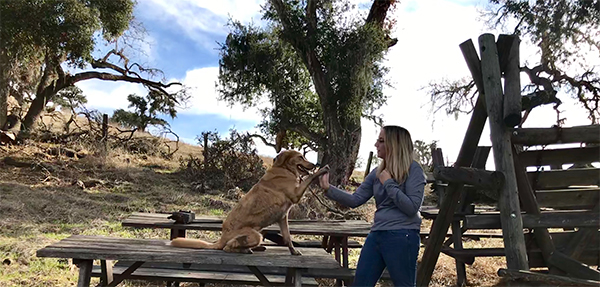
Practicing “paw” command.
Do Your Research
So, what should you be looking for?
Certifications:
CPDT-KA (Certified Professional Dog Trainer – Knowledge Assessed)
CPDT-KSA (Certified Professional Dog Trainer-Knowledge & Skills Assessed)
KPA (Karen Pryor Academy Dog Trainer Professional Program)
Terminology
Positive Reinforcement
Relationship Based
Clicker Training/Reward Marker
Organizations they belong to:
Pet Professional Guild- The Pet Professional Guild is a membership organization representing pet industry professionals who are committed to results based, science based force-free training and pet care
IAABC- International Association of Animal Behavior Consultants
Equipment:
You’ll find that some trainers only use flat or martingale collars and harnesses, while others may incorporate electronic collars or prong collars into their programs. You need to decide which equipment you’re comfortable with and which equipment you’d rather not use. Equipment alone will not bring dog training success. The key is to develop a positive relationship with your dog through training, and the equipment just supplements this relationship, serving as a tool to communicate more clearly with your dog. Without improving the bond you have with your dog, equipment is not so useful.
Detail:
Do they require you fill out an application/behavior questionnaire?
Do they have a liability form/insurance?
Do they offer a written behavior plan after one-on-one lessons?
Will they share contact information of prior clients they’ve worked with so you can get a referral?
Working on the “come” command.
Tips for Finding Potential Trainers
Many local Shelters and Rescues have excellent, modern, relationship-based training classes.
Your local branch of the SPCA is a good place to start when searching for a trainer.
Ask your veterinarian
Ask your family, friends and neighbors for recommendations
If you are looking for specific behavioral training for a problem behavior, the same rules as above apply, but you may also want to get a referral for a Veterinary Behaviorist. These are veterinarians who specialize in behavior. They can write out a behavior plan for you, prescribe medication if needed and set you up with a local trainer to help you follow through. Many trainers may also be able to help you with behavior problems and modification, but again, make sure they are experienced enough to be doing so, and handle the dogs and the behavior in a way you are comfortable with, and that won’t potentially harm your dog or make the problem worse.
We all love and want to help our dogs, while being able to live with them in a way that fits our lifestyle. Our dogs are always there for us, they love us unconditionally, and we owe it to them to slow down, breathe, educate ourselves and make sure we are doing the best for them we can.
Steph Du Preez is an Adoptions, Behavior, Returns and Local Intake Volunteer at GDRNE as well as, BS, CPDT-KA of Great Dog Rescue NE and Ohh, Sit! Pet Services.
Most cats are beloved furry members of the family but even though they are adored, they can also leave the human members of the family frustrated and confused by behaviors that don’t seem to make sense. What we label as misbehavior or random behavior is just miscommunication between the cat and human. All behaviors make sense to the cat! Let’s decode a few commonly misunderstood behaviors.
Why Does My Cat Like to Hide?
Cats need hiding places.
If your cat likes to hide, it isn’t because he doesn’t like you. If you’ve been trying to get your cat to be more sociable by dragging him out from under the bed, it’s only going to backfire. Being able to have hiding places provides security and allows the cat to feel invisible. If the hiding place gives the cat the opportunity to have his back up against something it also provides extra safety because he’ll feel that no one can sneak up on him from behind. If you set up comfy hiding places such as cave-type beds or boxes turned on their sides, you’ll give your cat a chance to remain hidden while still being in the room with you. As he feels more comfortable and has the choice of whether to engage or not, you may find him spending more time out in the open.
Is My Cat Asking for a Belly Rub When She Rolls onto Her Back?
Relaxed cat exposing that hard-to-resist, soft tummy.
You’re probably familiar with the image of a dog rolling over on her back for a good belly rub. What does it mean when your cat exposes her belly and looks as if she wants the same thing? If you’ve obliged in the past, chances are your hand was met with claws and teeth. Is it a trap? What is she telling you by this confusing behavior? In a secure, relaxed environment, a cat may stretch out on her back to sleep or enjoy a sun bath. It’s a sign she feels completely trusting about being in a vulnerable position. Don’t mistake this posture for an invitation to rub her belly because it will likely result in her grabbing your hand. Touching the bellies of most cats triggers this reflex behavior. The reflex is based on the fact that when threatened, a cat may take a defensive posture of rolling over to let an opponent know that she doesn’t want to engage in battle but if pursued, she will engage all weapons – teeth and claws.
Why Does My Cat Knock Things Off Tables?
Cats often love to explore objects on tables.
Many people may describe this behavior as cats just being jerks or deliberately knocking things over to be annoying. For cats, this behavior makes perfect sense and certainly isn’t motivated by a desire to annoy. Cats use their paws to investigate. It’s safest for a cat to explore an object with his paw before he puts his face close to it. Cats will also touch objects to test for potential movement during play, especially if they’re bored. Certain objects that fall to the ground and roll may spark play behavior. Cats may also knock things off the table as an attention-seeking behavior. This behavior gets repeated when it gets a response from you. The perfect example is if your cat knocks something off your nightstand by the bed in the early morning hours. If you get up and put food in the bowl to quiet him you’ve just taught him that this attention-seeking behavior was a success.
Why Does My Cat Scratch the Furniture?
The ability to scratch is a natural and important part of cat life.
Furniture scratching isn’t done just to sharpen claws and it certainly isn’t done to be destructive. So why does your cat choose the sofa instead of the scratching post? Typically, cats look for objects that are tall, sturdy and covered in a claw-appealing material. Objects also need to be located where the cat likes to scratch. Many scratching posts are too short, covered in a soft material and not very sturdy. To understand what a cat needs, you must understand why they scratch. First, it removes the outer dead nail sheath to expose the new growth. Scratching is also a marking behavior. In addition to leaving a visual mark, it leaves a scent mark from scent glands in the paw pads. Scratching is also how a cat stretches her back and shoulder muscles. Last, but not least, it’s an emotional release. These are all much needed functions in daily cat life. If you’ve tried to convince your cat not to scratch, you’ll only frustrate her. Cats need to scratch. Provide a tall, sturdy post and place it where your cat is currently scratching. Sisal-covered posts are often most appealing to cats. If you give your cat a better option than the sofa, she’ll use it.
Why Isn’t My Cat Affectionate?
Cats show affection in many different ways.
Actually, cats are affectionate, but we often expect them to show it in the same way as dogs. You may be missing signs of affection from your cat. A common sign of affection is when a cat rubs his cheek against you. If you thought that behavior was just marking, you’re missing the good part. It’s associated with affection, friendliness and familiarity. Another sign of affection is head bunting. This is where your cat touches or butts his forehead up against you. Kneading is another affectionate behavior. It’s a throwback to kittenhood where kittens would milk tread with front paws to stimulate the mother’s release of milk. Many adult cats engage in the behavior on soft surfaces (such as our laps) when feeling content and happy. There are many other affectionate signs from your cat as well, such as an upright tail flick when greeting you, displaying a vulnerable posture, slow eye blinks (also known as cat kisses), touching you with a paw or sitting close by. Your cat may even lick you or “groom” you, known as allogrooming, which is a clear sign of affection as well. This is how the cat mixes his scent with yours. And of course there’s always the magical, mystical purr! Although purring is complex and can be displayed in a variety of situations, chances are, the cat that’s curled up next to you is purring out of love and affection.
What Else Can I Do to Understand my Cat?
Learn to Think Like a Cat
Decoding a cat’s behavior is easier than you realize if you take the time to look at the environment from their point of view. Rest-assured that every behavior, no matter how puzzling it may seem, always makes sense to the cat.
Keep an eye on our blog for future articles and tips on how to better understand your feline friends! You can also sign up for our newsletter to receive insider content and savings!
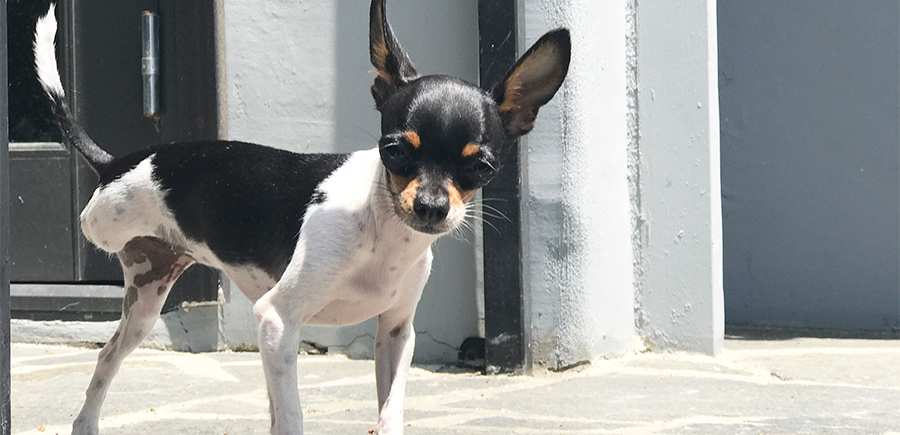
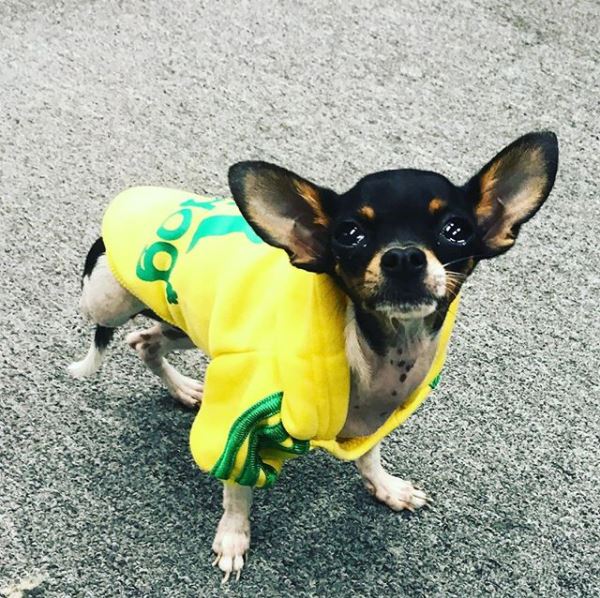
Last year I walked into a dog rescue organization looking for a doggy soulmate and jogging partner. I wanted to be “that guy” running through the canyons of Los Angeles with a big dog galloping by my side. But, fate is a fickle mistress and decided my future would entail a two pound three legged teacup chihuahua. Oh how the gods must have laughed at me! But the moment I saw her at the shelter, I knew we were connected. From that moment, all thoughts of running the canyons went up in smoke and were replaced with images of being “that guy” that dresses up his little one in the latest doggy fashions. And to this day, it was the best decision I’ve ever made. Sure my doggy clothing budget is a bit higher than expected, but dang she turns eyes while walking down Hollywood Blvd.
“I work fine on three legs!”
What should she eat?
One thing I underestimated was finding a proper diet for my little Frida. See, I grew up as a child of the eighties and during that time period what we feed our dogs was drastically different than the products available today. Back then we just bought the most affordable dog food on the supermarket shelf. What did it matter if it was Brand A or Brand B? It was all the same, we didn’t read the ingredients we just trusted the brand. Well, it’s twenty five years later now and I have my first dog of my own and one of my main concerns revolved around making sure she is on a proper healthy diet. The way I looked at it, I don’t feed myself fast food seven times a week, why would I feed my Frida the dog food equivalent of fast food?
“Please don’t drink the Frida!”
Wait, My Dog is a Wolf?
So, I went where most people go today for knowledge, Google! And I was inundated with confusing and conflicting information. One theme that seemed to be used by multiple brands was that “your dog is wolf, they should eat like wolf.” So I took that info to Frida’s veterinarian and asked her to confirm my research. She laughed at me and asked if I considered myself a neanderthal. She said, “Of course you don’t and you wouldn’t base your diet on what a neanderthal would eat, so why would you base your dog’s diet on what a wolf would eat?” She informed me that my little Frida needs more than just meat, she needs a diet, balanced by including high-quality sources of fat and fiber as well.
No, Frida is #NotAWolf!
Armed with veterinarian backed information, I continued my search for Frida’s food. And I landed on CORE RawRev by Wellness. First of all and most importantly, Frida loved the taste and devoured her first meal. And for her, that was important first step. She tends to be a very picky eater.
But what really confirmed my choice was the changes I observed in Frida. I immediately witnessed her energy levels perk up─ she was more active and playful. I noticed a massive change in her coat. Not only did she seem to shine more, but I swear she actually grew more hair! And finally and most important for Frida (seeing that she is missing a leg and all), she lost weight and gained lean muscle.
“I hear everything!”
Balanced Diet, Happy Frida!
Frida is my first dog, or you can say she’s my first child. I spend endless hours enjoying her company and companionship. And now, knowing I have found the right diet for her, a healthy diet backed by her veterinarian, I’m confident that I will have a long and healthy journey with Frida. It turns out, she’s #NotAWolf. And a noteworthy side-effect of choosing CORE RawRev by Wellness, is that I’m actually saving money. Which in return, has increased her clothing budget!
The idea of creating a “treat tracker” came about for two very important reasons─ my dogs Zoey and Jack. Aside from feeding my dogs a healthy diet, I’ve always loved giving them treats. For me giving my pups a treat is not only rewarding to them, but it’s rewarding to me as their pet parent. Treating helps me feel more connected and bonded to them.
But, as Zoey and Jack have aged, their bodies have changed. Both of my dogs are now seniors and their activity levels have begun to slow a little along with their metabolisms. Zoey started to put on some weight and Jack became diabetic. Having these changing health concerns caused me to take a step back and look at what I needed to do to ensure both of my dogs stayed healthy. I started to monitor and track how many times each day I was giving a treat, and it was pretty eye opening for me. Doing this helped me adjust the amount of treats I was giving them.
For Jack, insulin is now a part of his daily life, along with a regimented feeding schedule. He can still have treats, but I need to be thoughtful of when and how many he gets to help ensure his blood sugar remains stabilized. For Zoey, I have added more “play time” and exercise into her daily routine and I closely monitor how many treats she is getting each day and week. Since each dog has different health needs, they have their own treat tracker jars which have really helped me get their health back on track. The jars are also a great way for me to ensure other family members are aware of how many treats each dog is getting to ensure they are not getting an excessive amount.
With this new tracking Jack has been doing great and has remained his fun-loving self, and Zoey has maintained a healthy weight and loves all the extra play time!
Check out our step-by-step video, then keep reading for more detailed instructions & ideas on alternate ways to use your custom treat jar!
What You’ll Need / Supplies:
Jar/Canister
Chalk Labels
Chalk Marker or Chalk
Metallic Marker
Your Pet’s Favorite Wellness Treats
Ribbon (Optional)
Instructions:
Step 1:
Choose a Chalk Label size that best fits the size of the Jar you will be using
Step 2:
Determine where you want to place the Chalk Label
Step 3:
Peel and Stick the Chalk Label in the desired location
Step 4:
Use the Metallic Marker to customize your jar with your pet’s name or with paw prints or other desired designs. We labeled our jar with “Treat Tracker”
Step 5:
Use the Chalk Marker or Chalk to write on the chalk label and customize your treat jar. We labeled our jar with the day of the week and are using to track how many treats we are giving our pup each day. This will help track calories, and let other family members know how much we are all treating.
We use cookies on our site to provide you with the best user experience. Read Cookie Policy
Functional Always active
The technical storage or access is strictly necessary for the legitimate purpose of enabling the use of a specific service explicitly requested by the subscriber or user, or for the sole purpose of carrying out the transmission of a communication over an electronic communications network.
Preferences
The technical storage or access is necessary for the legitimate purpose of storing preferences that are not requested by the subscriber or user.
Statistics
The technical storage or access that is used exclusively for statistical purposes.The technical storage or access that is used exclusively for anonymous statistical purposes. Without a subpoena, voluntary compliance on the part of your Internet Service Provider, or additional records from a third party, information stored or retrieved for this purpose alone cannot usually be used to identify you.
Marketing
The technical storage or access is required to create user profiles to send advertising, or to track the user on a website or across several websites for similar marketing purposes.